

CapitalPath Daily
Prepare instead of predict
Why retirement planning often works better when it starts from where you stand today rather than from a single forecast. A short piece with a sourced quote and a fictional story.
Nilesh Kulkarni · CapitalPath
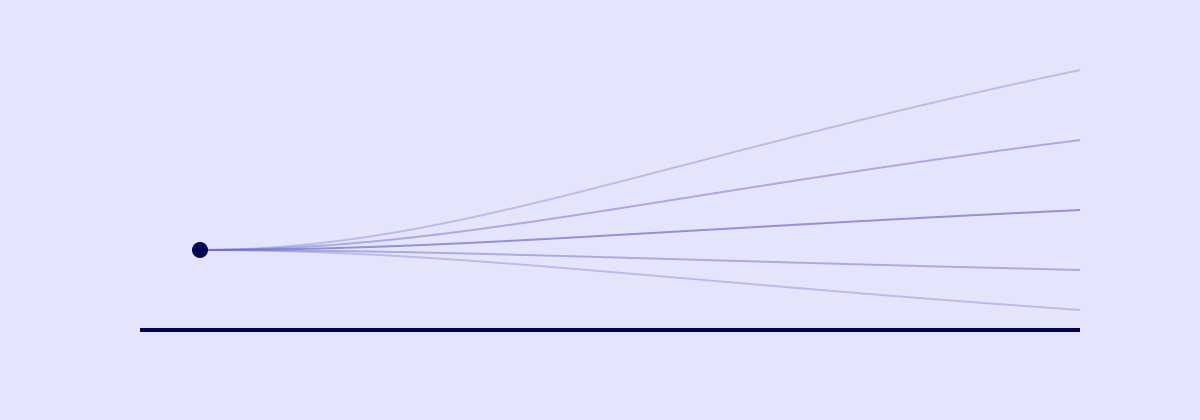
In my opinion, the key to dealing with the future lies in knowing where you are, even if you can't know precisely where you're going.
The idea
On 20 November 2001, Howard Marks sent Oaktree clients a memo titled You Can't Predict. You Can Prepare. In it he argues that economic forecasts add little value, whereas cycles, and preparing for them, are essential. He raises the obvious objection himself: how can you prepare for cycles if you can’t predict them? His answer is not a better forecast but a sentence about knowing your position: “In my opinion, the key to dealing with the future lies in knowing where you are, even if you can't know precisely where you're going.”
Marks isn’t arguing against planning, and he isn’t dismissing models. He is pointing at the difference between wanting one clear forecast and doing the duller work of describing where you stand today, with your income, your commitments, your slack and your uncertainties, before a long-term plan behaves as if the road ahead were already known.
For retirement planning, that means starting with an honest picture of the present. A projection with €110 a month and a larger figure later can look reassuring, provided you read it as one possible path. The harder part comes first. Do you know where you would stand if your pay, your health or your family situation turned out differently from the best-case sheet? Or are you building the plan around a single forecast that feels good but leaves no room for anything else?
No product comes into this yet, and the figures are not a calculation for you. The question is whether you are trying to predict or to prepare. CapitalPath deliberately starts with orientation: understand first, then decide.
A fictional story
The people and the events are invented.
Farah is 36 and has a salaried job. On a Tuesday evening she has a spreadsheet open with three scenarios. The middle one shows €110 a month (just an example) and a larger figure later on; the top one looks smoother still. “Go with the middle one,” an acquaintance tells her. “That’s roughly how it’ll turn out.”
Farah is ready to set up the standing order the next day. Then she notices that she has been reading the spreadsheet as if it were a forecast, and that she can’t answer the simpler question of where she stands today. What if her salary looked different for three months, or a family commitment came along? What if the larger figure depends on assumptions she has never spelled out? And which outcome is missing from her sheet simply because it would be uncomfortable to look at?
She closes the laptop and writes down three questions. Where do I really stand today? Which outcomes have I left out? And what can I prepare for, instead of pretending I can predict how things will go?
What this means
01
Marks separates prediction from preparation. The key is often not a better forecast but knowing where you stand.
02
A monthly figure on a projection is not a map. Without an honest picture of where you are today, a plan can easily bet everything on a single outcome.
03
None of this argues against saving for retirement. Preparing leaves room for several outcomes, while a prediction usually allows for only one.
04
Know where you stand first, then choose the plan. Understand first, then decide.
Explore this further
Sources & further reading
- You Can't Predict. You Can Prepare. (Memo to Oaktree Clients) (opens in a new tab)
Oaktree Capital Management / Howard Marks · 20 November 2001
- The Best of … (memo index entry for the 20 Nov 2001 piece) (opens in a new tab)
Oaktree Capital Management · Index entry for the memo of 20 November 2001
Creation note
This content may be created using AI assistance.
A short note
This is general information and orientation, not individual advice.